Part 3. Project 3. Ex 2: Contextualising Images

In this exercise I am to research a selection of artists mentioned and then using a current news item, re-contextualise an images to say something new about the story it represents.

John Heartfield

famous anti-fascist images ww2 heartfield aiz nazi germany
John Heartfield Exhibition. (2019). Anti-Fascist Art. Heartfield’s Famous Anti-Nazi Antiwar Anti-Fascist Images. Warnings Of The Rise Of Fascism. [online] Available at: https://www.johnheartfield.com/John-Heartfield-Exhibition/john-heartfield-art/famous-anti-fascist-art/heartfield-posters-aiz [Accessed 8 Aug. 2019].

John Heartfield was an artist who managed to earn himself the 5th spot on the Gestapos most wanted list, pretty impressive work. Between 1930 and 1938 he created artwork for popular left wing magasine Arbeiter-Illustrierte-Zeitung (AIZ). It took until 1933 for him to leave Berlin after an SS assassination squad broke down the door to his apartment and he narrowly escaped.

I found a variety of covers for the AIZ magasine online, this is my particular favorite as the message is so clear. The dove of peace impaled upon the bayonet of war needs no further explaining!

Peter Kennard

Peter Kennard. (2019). Photomontage. [online] Available at: http://www.peterkennard.com/photomontage#/earth/ [Accessed 10 Aug. 2019].

Peter Kennard is a photomontage artist who is most well known for his political works made for CND in the 70’s and 80’s. Trained as a painter originally he abandoned it in favour of montage in the 70’s in a bid to better unite art and politics for a wider audience.

I chose this image because although simple it has a few definite points to make. I think that it is illustrating the absurdity of human having filled the Earths orbit with lethal missiles pointing down at our own planet. Some are meant to strike at an enemy, some are meant to shoot down an enemies missiles, but all of them are designed for the same thing, death. Humans are killing each other but worse, the very planet that we are stood on with our ignorance and greed.

Hannah Hoch

Hannah Hoch was a German Dada artist who was one of the original photomontage artists.

Dada definition= ”  the Dada movement consisted of artists who rejected the logicreason, and aestheticism of modern capitalist society, instead expressing nonsenseirrationality, and anti-bourgeois protest in their works.[4][5][6] The art of the movement spanned visual, literary, and sound media, including collagesound poetrycut-up writing, and sculpture. Dadaist artists expressed their discontent with violence, war, and nationalism, and maintained political affinities with the radical far-left” En.wikipedia.org. (2019). 

Dada. [online] Available at: https://en.wikipedia.org/wiki/Dada [Accessed 10 Aug. 2019].

Hoch survived the Third Reich despite being classed as a degenerate artist where many of her works linked the liberation of women with political revolution.

Cut with the Kitchen Knife Dada through the Last Weimar Beer-Belly Cultural Epoch in Germany (1919) was a famous piece that is seen as a criticism of the democracy imposed by the Weimar Repulic.

Im still not sure how this can be seen as a criticism of the Weimar democracy? Maybe its the juxtaposition of the word Dada with the different elements Hoch has chosen to represent?

Martha Rosler

Much like Hannah Hoch, Martha Rosler focuses a lot of her work on the position of females within a male dominated society.
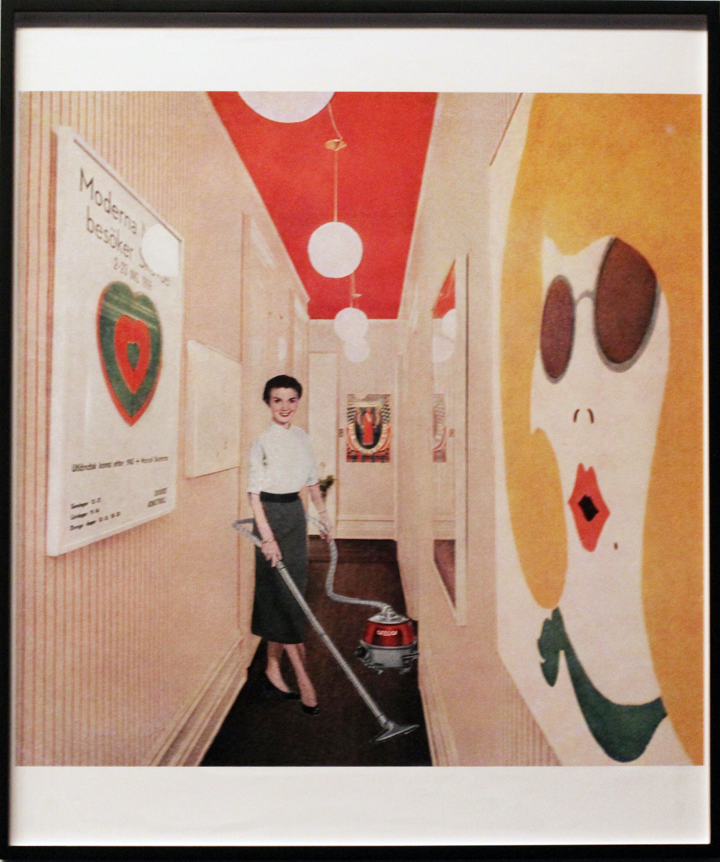
Blog.nmwa.org. (2019). Martha Rosler | Broad Strokes: The National Museum of Women in the Arts’ Blog. [online] Available at: https://blog.nmwa.org/tag/martha-rosler/ [Accessed 10 Aug. 2019].

Born in America in the 40’s Rosler had a different view of women within a male dominated society from Hoch but still reaches approximatley the same message. The woman shown in the above image ‘ Woman with Vacuum, or Vacuuming Pop Art‘ shows a woman in a domestic setting. She is surrounded by images by male pop artists and is pictured in a subservient role. It reminds me of an essay I had to write years ago about the film Oceans 11, at one point in the film Julia Roberts is shown wearing a stunning dress alone in an art gallery. The point of that particular camera shot was to show that she is considered by the male character as just another possession, another piece of his collection. I receive the same message from this image by Rosler. The woman with the vacuum is far prettier than anything on the walls, far more useful, yet she is relegated to cleaning the area. The area which I notice is small and cramped and looks to be trapping her inside. But then again that small corridor could be seen as an attempt to frame the female character and present her as the greatest work of art of them all, everything is very open to interpretation.

Tate. (2019). Martha Rosler | Tate. [online] Available at: https://www.tate.org.uk/whats-on/tate-modern/exhibition/ey-exhibition-world-goes-pop/artist-biography/martha-rosler [Accessed 10 Aug. 2019].

In the second part of ths exercise I had to ” using a current news item, re-contextualise an images to say something new about the story it represents

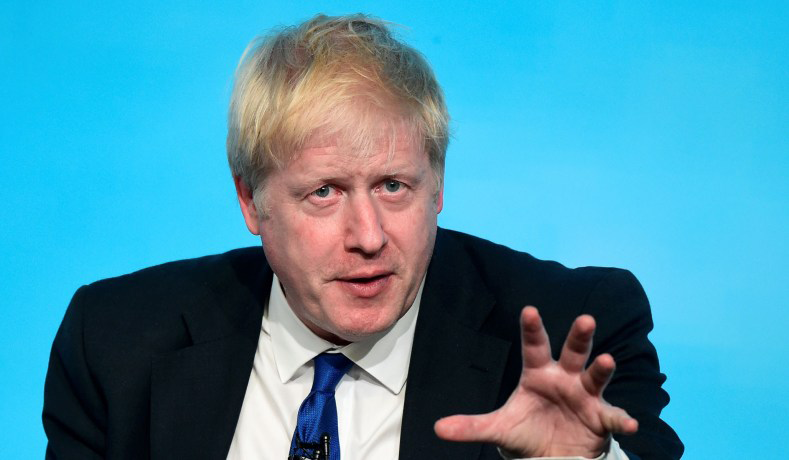
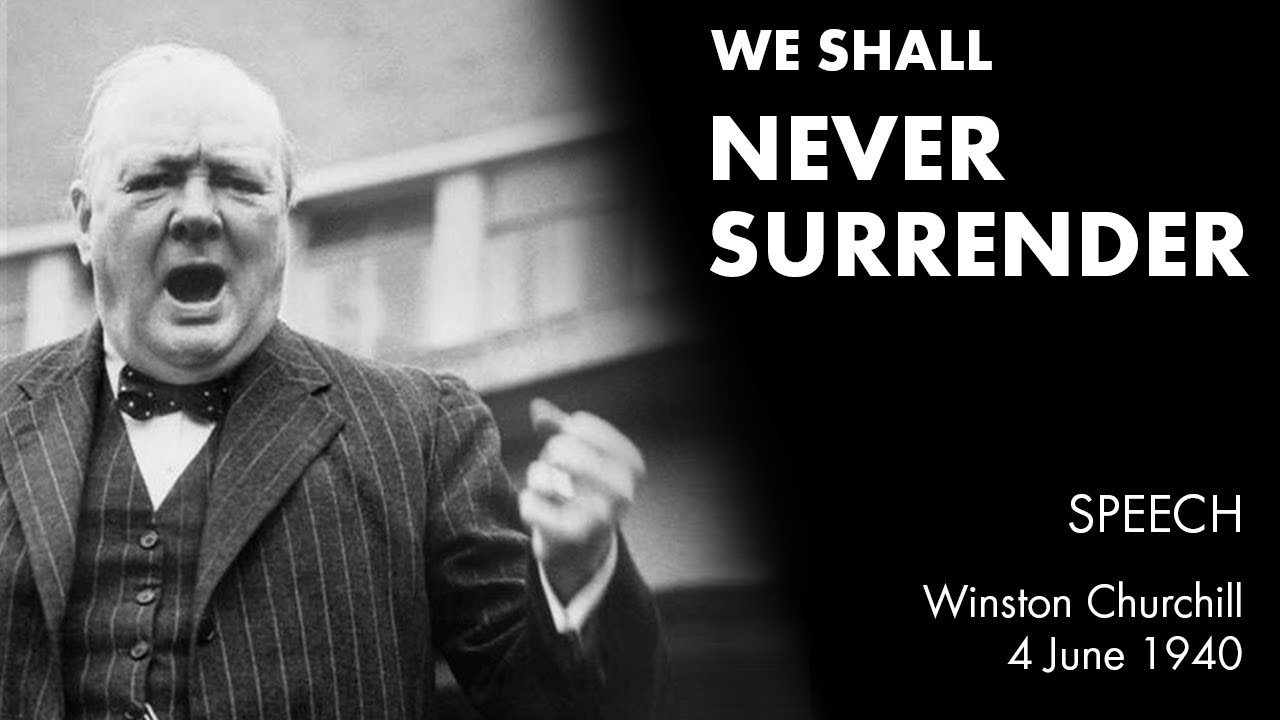
I chose to use Boris Johnson because I think that he’s a fabulous character. Of all the issues he’s thrown himself into lately I chose to use the Brexit deadline. When he gets going he really reminds me of Winston Churchill and his anti-Nazi rhetoric. I used a selection of photographs to put my montage together.

Flags of the United Kingdom and the European Union. UK Flag and EU Flag. British Union Jack flag. Stock Photo - 57550566
123RF. (2019). Flags of the United Kingdom and the European Union. UK Flag and... [online] Available at: https://www.123rf.com/photo_57550566_flags-of-the-united-kingdom-and-the-european-union-uk-flag-and-eu-flag-british-union-jack-flag-.html [Accessed 10 Aug. 2019].
YouTube. (2019). WE SHALL NEVER SURRENDER speech by Winston Churchill (We Shall Fight on the Beaches). [online] Available at: https://www.youtube.com/watch?v=s_LncVnecLA [Accessed 10 Aug. 2019].
Nationalreview.com. (2019). Boris Johnson & Prime Minister Candidates: Can Anyone Beat Him? | National Review. [online] Available at: https://www.nationalreview.com/2019/07/can-anyone-beat-boris/ [Accessed 10 Aug. 2019].

I kept the message quite simple, I wanted to just communicate Johnson’s Churchillian determination to stand up for the independence of the UK against the oppressive EU overlords. I think this image does that quite successfully.

Part 3. Project 2. Ex 1: Mixed Messages

In this exercise I am to look at 5 different examples of statements written in different typographys. I am to describe what is being communicated through the combination of the message and the typeface. I am then to (optionally) extend this exercise by finding my own examples which are both complementary and those with discrepancy.

  1. Enjoy Your Stay: This is written in a bold calligraphic font which reminds me a little bit of a gothic type face. The phrase ‘enjoy your stay’ makes me think of hotels and guest houses. When presented in this font I would assume that the venue is somewhere like an old abbey or a country manor.
  2. Do Not Feed The Animals They Are Dangerous: This is written in plain capital letters. Capital letters make a phrase seem emphatic, as though someone is shouting. I would expect to see this coloured red to reinforce the message.
  3. We Are Professionals: This is written in a font which resembles a typewriter. This does not strike the right tone with me. It is probably that I am used to seeing official documents written either in Ariel font or Times New Roman. Decades earlier there would have been no choice but to use a typewriter, now it is just another font which is a stylistic choice.
  4. Luxury: This is again not written in the font that I would expect. The font it is presented in reminds me more of something that a product wanting to promote it’s organic origins would use. It looks handwritten and not as smart as I would expect from something denoting ‘luxury’.
  5. Hand Made: This text looks like Ariel, this is what I would choose for the phrase ‘we are professionals’. It is a default font encouraged throughout several industries as the only official font to use. I would have chosen the font that has been used for ‘luxury’ to communicate this phrase.

Part 3. Ex 1: Identifying Visual Communications

In this exercise I am to identify two or three different examples of 6 types of visual communication; alternative messages, interactive design, authorial content, identity design. information and persuasion. I am then to make notes on the ways these visual images make reference to broader ideas of visual culture.

Persuasion

  1. Poster Advertising – Health and Habits

In this advertisement the NHS, a very overstretched organisation, are making a simple point. If you smoke then you are killing your heart, the organ that keeps you alive. The visual image of the heart in the ash tray should be enough to make any smoker think twice and look at the information line about how to find ways to stop smoking. Society is becoming increasingly visual, it is a far more effective approach to show someone a photographic representation of what they are doing to themselves. Intellectually every smoker knows that their habit is unhealthy so taking the same text based approach will not have any new great effect.

2. Moving Image advertising – Quality of Fast Food

YouTube. (2019). The Whole Chicken. [online] Available at: https://www.youtube.com/watch?v=KykM1kwdaOA [Accessed 8 Aug. 2019].

This advertisement has used humor (I for one can’t watch it without laughing) to inform viewers that the product used by KFC is ‘The Whole Chicken’. I was torn about whether to use this as an example of Persuasion or Information, I chose to class it as Persuasion because KFC ‘s end goal is to persuade us to become customers.

Using humour and a popular music soundtrack makes it accessible to a wide range of ages, inparticular their target audience of young people.

3. Political Slogans

Leave bus
Newstatesman.com. (2019). It’s official – there’s a £200m hole in the Brexit bus NHS promise. [online] Available at: https://www.newstatesman.com/politics/staggers/2017/08/its-official-theres-200m-hole-brexit-bus-nhs-promise [Accessed 8 Aug. 2019].

This Brexit Bus was used as a campaigning tool during the run up to the EU Independence referendum. Slogans such as this are designed to play on the emotions of those who see it and stimulate an emotional response.

Information

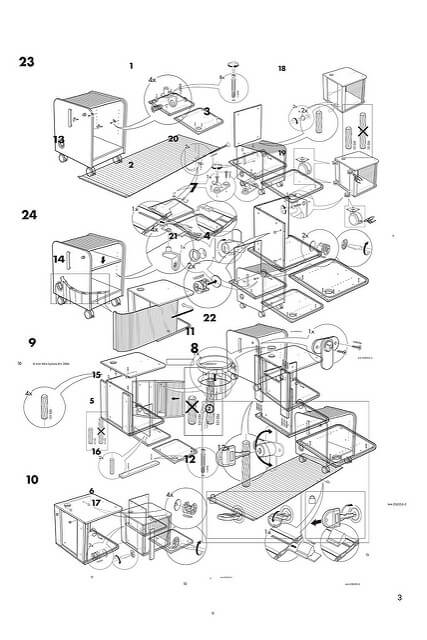
  1. Furniture Assembly Instructions
hard ikea furniture manual
Mates, F. (2019). 6 Hardest IKEA Furniture to Assemble. [online] Flat Pack Mates. Available at: https://flatpackmates.co.uk/blog/hardest-ikea-furniture-to-assemble/ [Accessed 8 Aug. 2019].

This is an example of the instructional diagrams that come with furniture flat-packs. Using a picture guide ensures that language is not a barrier, this will aid the company in terms of global marketing. Picture guides are also easy to interpret and follow.

2. Aircraft Safety Instructions

No luggage.jpg
Maksel, R. (2019). Those Safety Instructions in Your Airplane Seat Pocket? Nobody Understands Them.. [online] Air & Space Magazine. Available at: https://www.airspacemag.com/daily-planet/cards-180950298/ [Accessed 8 Aug. 2019].

Aircraft safety instructions are given in pictograph form to enable greater comprehension by passengers. I would assume that this is to meet the challenge faced by different language and education levels. Interestingly my research flagged up an article which showed that they had to be redesigned by non-cabin safety experts as passengers intiially struggled to comprehend the finer detail.

3. Visual Map

museum_map.jpg
Faculty.oc.edu. (2019). Map of British Museum. [online] Available at: http://faculty.oc.edu/stafford.north/britmus/mapanim.htm [Accessed 8 Aug. 2019].

This is an example of the kind of map regularly displayed at public attractions. Its simple pictorial form allows people to navigate around various facilities. The use of colour makes it simple to identify a specific theme such as rooms displaying exhibits relevant to ‘Egypt’.

Identity Design

  1. Liverpool Victoria Insurance
MyCustomer. (2019). Customer experience: The LV= approach to ‘Why On Earth’ moments. [online] Available at: https://www.mycustomer.com/experience/engagement/customer-experience-the-lv-approach-to-why-on-earth-moments [Accessed 8 Aug. 2019].

LV= are an insurance company who have a reputation for excellent customer service. Their logo is purposely designed to resemble the word ‘love’, this is the message which they wish to give their customers. In a marketplace where everyone seems to just be out to take as much of your money as possible, LV= are giving out a message that they will care about their customers, treat them with respect and heart.

2. Apple

Apple (United Kingdom). (2019). Apple (United Kingdom). [online] Available at: https://www.apple.com/uk/?afid=p238%7CsaOVFdZd6-dc_mtid_187079nc38483_pcrid_352745420825_pgrid_15144742573_&cid=aos-uk-kwgo-brand–slid–bran-apple-e-product- [Accessed 8 Aug. 2019].

Apple, a technological giant with instant global recognition. Rumours say that the bite missing from the apple is a nod to Alan Turing during the code breaking era at Bletchley Park. The logo is simple, dynamic and instantly recognizable. Taken as a guarantee of quality it adorns everything from mobile phones to laptops and tablets.

3. Royal Air Force

En.wikipedia.org. (2019). Royal Air Force roundels. [online] Available at: https://en.wikipedia.org/wiki/Royal_Air_Force_roundels [Accessed 8 Aug. 2019].

The RAF uses an iconic roundel design as it’s logo. Reminiscent of a target and incredibly simple this roundel gets applied to everything from clothing to aircraft and is instantly recognisable. Historically a roundel was used to identify planes a British and more easily discernible from the Germans. Originally the Union Jack was painted on aircraft but this was often mistaken for the Iron Cross (German). In 1914 it was decided that the RAF would imitate the French with the use of a roundel but reverse the colour scheme. This logo is still in use today.

Authorial Content

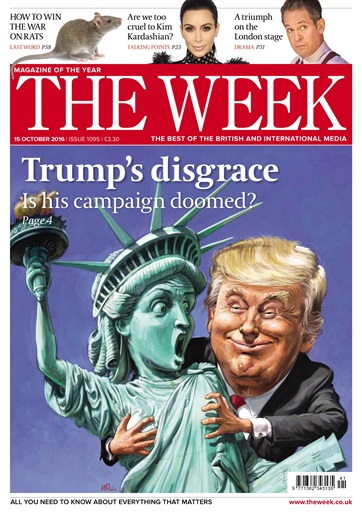
  1. The Week Magasine
Pocketmags.com. (2019). The Week – 15th October 2016. [online] Available at: https://pocketmags.com/ca/the-week-magazine/1095 [Accessed 8 Aug. 2019].

The illustrations on the front of the magasine The Week always relate to the news stories on the inside. Uniquely they uses a combination of humour and excellent traditional painting of caricatures to render a unique cover image. Such an approach to cover design ensures that they stand out on the shelves of newsagents and make an impression.

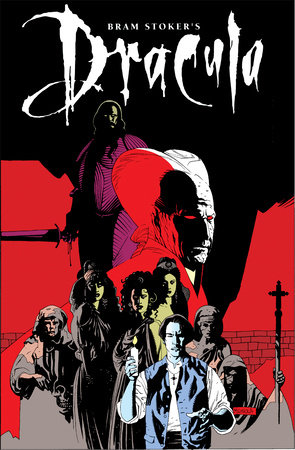
2. Graphic Novel

Bram Stoker's Dracula (Graphic Novel) by
PenguinRandomhouse.com. (2019). Bram Stoker’s Dracula (Graphic Novel) | PenguinRandomHouse.com: Books. [online] Available at: https://www.penguinrandomhouse.com/books/579782/bram-stokers-dracula-graphic-novel-by-roy-thomas-mike-mignola/9781684053155/ [Accessed 8 Aug. 2019].

The covers of graphic novels always give an indication of the story within. Even without previously knowing Bram Stokers ‘Dracula’ we can make some guesses as to the theme of the story from the visual elements on the cover. The themes of black and red lead us towards the horror genre which is reinforced by the religious iconography and the body language of those depicted in this cover montage.

Interactive Design

  1. Bandersnatch – Netflix TV series
Image result for bandersnatch tv series
YouTube. (2019). Black Mirror: Bandersnatch | Official Trailer [HD] | Netflix. [online] Available at: https://www.youtube.com/watch?v=XM0xWpBYlNM [Accessed 8 Aug. 2019].

Massive in pop culture the Bandersnatch choose-your-own-adventure went viral in the winter of 2018. The first of it’s kind this episode of series Black Mirror allowed viewers to partake via their remote controls in choosing their way through the episodes plotline with 5 different endings. It gained a lot of publicity for it’s innovation and for the series it originated from.

2. Computer Games

Image result for a thiefs end
Jones, G. (2019). Uncharted 4: A Thief’s End – More waiting for PS4 fans revealed. [online] Express.co.uk. Available at: https://www.express.co.uk/entertainment/gaming/629130/Uncharted-4-A-Thief-s-End-release-date-April-PS4 [Accessed 8 Aug. 2019].

Computer games are what springs to mind the most in terms of interactive design. Adventures allowing the player to explore a variety of paths to progress along a pre-established game pathway are constantly popular. The choice to kill an established villan or not, where to hide the body, how to infiltrate a building, everything is open to the game player.

Alternative Messages

  1. Fathers for Justice
Richardson, A. (2019). ‘Church Stretton was such a hotbed’: How Fathers 4 Justice started in sleepy Shropshire. [online] Shropshirestar.com. Available at: https://www.shropshirestar.com/news/2018/01/15/church-stretton-was-such-a-hotbed-how-fathers-4-justice-started-in-sleepy-shropshire/ [Accessed 8 Aug. 2019].

Fathers for Justice are a group of Fathers banned from seeing their children in search of equal rights and access to their offspring. They carry out publicity campaigns such as storming Parliament or gatecrashing Buckingham Palace to raise public awareness.

2. Immigration protests

Bored Panda. (2019). 89 Of The Funniest Protest Signs Ever. [online] Available at: https://www.boredpanda.com/funny-protest-signs/?utm_source=google&utm_medium=organic&utm_campaign=organic [Accessed 8 Aug. 2019].

Alternative placards such as this are becoming more and more popular on mass protests. Other favourites include ‘I dont know why we’re shouting’ and ‘Someone told me there would be cake’. Intended as they are to be humorous, they also have a serious point to make.

Assignment Two

In this assignment I am to choose a piece of text by a contemporary author that explores time and/or place. I am then to carry out a close reading of it and write about my response, interpretation and feelings about the writing and its themes. I am also to mention: plot, structure, character, narrator, point of view, language and language techniques, as well as possible themes of time and place. (Word limit – 1500)

The Toymakers by Robert Dinsdale. Chapter 1 Page 1

The Emporium opens with the first frost of winter. It is the same every year. Across the city, when children wake to see ferns of white stretched across their windows, or walk to school to hear ice crackling underfoot, the whispers begin: the Emporium is open! Christmas is coming, and the goose is getting fat … If, at a certain hour on a certain winter night, you too had been wandering the warren between New Bond Street and Avery Row, you might have seen it for yourself. One moment there would be darkness, only the silence of shops shuttered up and closed for business. The next, the rippling snowflakes would part to reveal a mews you had not noticed before–and, along that mews, a storefront garlanded in lights. Those lights might be but pinpricks of white, no different to the snowflakes, but still they would draw your eye. Lights like these captivate and refract the darkness. Lights like these can bewitch the most cynical of souls. Watch out, because here one such soul comes, hurrying out of the night. He is a barrel of a man, portly to those who would look on him kindly, corpulent to those who would not. Outside the Emporium, he stops and gazes up, but this is not the first time he has been enchanted by these lights, so he steps through the door to be met by the whirlwind smells of cinnamon and star anise. Ribbons of navy blue stream apart and, in the vaulted ceiling above, miniature bells tinkle, spiriting up memories he has tried hard to forget: sleigh rides through parks too painful to remember, wassailing on the village green, Christmases in better, more innocent times. (Words 280)

This was an easy extract to choose for this exercise. I read a lot so am accustomed to good writing, even so, on reading this first page of ‘The Toymakers’ I was immediately entranced. I recall at the time actually noting how remarkably swiftly the author had constructed a sense of time and place. Months later on reaching this exercise in the course manual, I knew exactly which book to use.

The extract is longer than the instructions in the assignment, it proved to be awkward to edit down. The initial lines are essential to setting the season and atmosphere, the last few lines provide more depth to the character and situation, because of this I chose to keep both end of it and just use a longer extract.

The first theme which I notice in this extract is ‘Time’. The reader is immediately made aware that the narrative is set in a previous era, this is made clear in a variety of ways. The very first words of the extract, ‘The Emporium’, conjure up images of antiquity and discovery. Language choice as the passage continues, for example ‘first frost of Winter’, further this themes establishment. Word choices such as ‘mews’ ’emporium’ ‘garlanded’ and ‘corpulent’ are not in such common use anymore. They speak of an older era, possibly Victorian, it brings to mind the kind of architecture that is traditionally on the front of Christmas cards. It took me a while to figure out what Dinsdale had done with his approach to the language used. It didn’t seem to be old English, but at the same time, it is not as casual as the wording in contemporary novels. I eventually realised that he had just chosen to use correct English without any shortenings. For example, ‘It is the same every year’ vs ‘It’s the same every year’. This technique gives the whole text a flavour of coming from a different era but without alienating the modern reader. References to traditional Christmas elements such as the fattening of the goose, and ‘wassailing on the village green’ which are no longer mainstream all conspire to whisk the reader back to a world we quite often only see depicted on the front of Christmas cards.

Much like in the excerpt of The Road there is a man character who provides our focal point without actually being introduced to us or saying anything. The sense of ‘Time’ is so strong in this extract that by the time the character is introduced he comes automatically clothed (for me) in a long coat and a top hat. Possibly even clutching a walking cane he strides onto the scene so clearly that I can see it as if it were the opening shot of a film. Dressed as he is as in something you would expect from the Edwardian/Victorian era, this brings me to the second strong theme in this extract, ‘Place’.

We are given a location, ‘the warren between New Bond Street and Avery Row’, which to most readers will say ‘London’. A maze of streets, dark, full of swirling snow, this is an easy thing to ask a reader to picture. We can already imagine walking through the snow having been primed by the authors previous mention of ‘ice crackling underfoot’. As we, with the character described, see the lights garlanding our destination we are even told how they make us feel, how they draw us in. This is a clever use of language to manipulate the readers engagement and something which it took me quite a few read-throughs to notice. The lights are mentioned four times within four consecutive sentences. this intentional repetition reinforces the visualisation.

The third theme which I noticed is ‘Emotion’. At the start of the extract the author begins to remind us of the excitement that is felt in the run-up to Christmas. Most people have happy recollections of Christmas no-matter what their individual variation of it actually looks like. By staying traditional and generic with his use of festive references Dinsdale allows every reader to interpret these emotional triggers with their own details. When I was small we never had a goose, and my parents routinely chose the more practical approach of cooking a mass of legs and breasts as opposed to a whole bird. Despite this the mere mention or sight of a goose roast dinner sends my inner child giddy at the prospect of Christmas and all it’s associated fun. All these early references are designed to trigger positive emotions. On sighting The Emporium with its garlands of light we are instructed on how to react, we are told that we are ‘captivated’, ‘bewitched’ and ‘drawn in’. Fairy lights are another traditionally cheerful festive association, town centres even hold events when the lights are officially switched on! It is at this point that Dinsdale introduces the contrast of the character and his emotions. Whereas the goose being described as getting fat was a positive association, the nameless man is described alternately as ‘a barrel’, ‘portly’ and ‘corpulent’. These are more negative word choices which lead into the direct contrast between the positive sights and smells of the Emporiums interior vs the negative Christmas memories that they trigger within the man.

Writing in the second person allows the narrative to further envelop the reader, it feels as though we are in the scene itself alongside the character. I think it is this factor which makes the scene so vivid for me personally. I feel like I could storyboard the beginning of this as a film quite easily. More generically the use of a second person narration allows the reader to focus on the sense of place being generated by the text, senses are stimulated through triggered memories. When these are positive memories there will be increased external buy-in. This in turn allows greater engagment when the character is introduced.

The juxtaposition of the positive Christmas atmosphere that Dinsdale has created with someone who seems to have negative attitudes towards it is designed to intrigue, what has happened to this character that he can not only withstand the positive triggers which we the reader are subjected too, but further, can give them a negative overtone? Although in such a short extract there can be no real sense of the plot of the story, the building structure of the opening has already given the reader something to discover, the reason for the mans negativity and hopefully, the pathway to his recovery.

I find Dinsdales writing, specifically the way he can create such immersive scenes, utterly enchanting. The themes are explored alongside the plot allowing the reader to pay as much attention to them as they choose. When I initially read this book I was concentrating purely on the plot line, but having completed this Part 2 of the Creative Arts Today module, and having learnt so much about particularly The Heroes Journey and poetic devices, I will certainly be reading it again soon!

Word count: 1,137

Dinsdale,R. Published 08 Feb 2018. The Toymakers. Penguin Books. United Kingdom.

Part Two

To conclude I am to write a commentary of about 500 words, drawn from my learning log and notes, reflecting on what I have learned in this part of the course and how I have put this into practice in my assignment piece.

The main thing that I have taken from this part of the module has been a greater awareness of poetic devices. I had always just assumed that poetic devices were restricted to poems themselves, now that various exercises have pointed out to me quite how obviously they are used in a variety of applications I am surprised that I have never noticed them before!

I was also intrigued to learn about how many different sort of poetic device there are and how they are key to constructing a good narrative within a novel. Since working through this module I have become more aware of what I am reading and how it has been constructed, this in turn has heightened my enjoyment of the text because now I can identify why I am finding it so immersive. Using this knowledge I was able to return to the extract of text and find a new level of appreciation for the skill with which it has been put together.

I was also surprised at how poetic some extracts of novels are when taken in isolation. I’ve never particularly liked poems, I’ve always thought of them as pointless, following this section of the module this is an opinion which I will have to re-visit.

A skill which I have learnt from this module is that of analysis or close reading. Trying to spot the different poetic devices felt like quite an enjoyable game and I’ve found myself looking for them in other items that I have been reading. It’s assisted me in identifying why I find some authors good and others not to my taste. Having learnt to carry out close reading I spent some time studying the extract properly and highlighting all the uses of poetic device that I could identify. I used the same technique to pick out where the different themes were introduced and incorporated.

When I’d successfully identified them I was able to establish a hierarchy and look for what I believe the author wanted to make most prominent. The themes of time and place were most prominent which would fit with the start of a novel. The most important thing is to establish a scene for a reader and immerse them within it before introducing the action.

I also found it interesting how much an author can say about a character without the reader knowing basic information such as a name or having witnessed any conversation. The extract from ‘The Road’ in Project 4 introduces the reader to a man and boy and through narrative device ensures that the reader forms impressions about them whilst knowing very little. This is another thing that I had never noticed before but will certainly learn from and use in my own work.

Part 2. Project 4. Exercise 2

‘He’, the man and ‘the boy’ are nameless. Why? Does their anonymity change the way we feel about the characters? Can we still care about them without names? Do they still have an identity without a name?

The anonymity of the two characters does not affect how I (as the reader) feel about them. What it does serve to do is to put the focus onto the situation in which they find themselves. The atmosphere is quite apparent even in such a relatively short extract, this is reinforced by the characters behavior, their watching of the road and the awareness of the potential need to run. In my opinion the two characters do still have identity without names, they dont need names whilst they have descriptors, over time their individual characters would emerge.

How can we tell they’re in danger? Are they fleeing the danger or do they expect to encounter it along the way? What sort of danger? Human? Animal? Elemental?

We can tell the two characters are in danger from a couple of references within the text. One is that the man is watching the road behind them, this implies that he expects danger from behind. The reference to him watching the road implies that the danger is to come from other humans. Animals and weather do not use roads, only humans would find that natural.

Another reference that alerts us to their potential peril is the idea that they have to be ready to abandon the cart and run away. This implies that peril could also lie along their route, maybe from bandits or outlaws.

More subtle references to the idea that they are in a hostile environment come from descriptions of the ‘gunmetal light’ and ‘shuffling through the ash’.

The chrome motorcycle mirror tells us the time is roughly contemporary. So whats happened to the rest of the recognisable contemporary world? Or is it a story set in the future? Post-apocalypse maybe?

To me the most likely scenario is that it is a post-apocalyptic environment such as in Mad Max. Other options could include refugees fleeing from a natural disaster. Humans really show their true colours when recognised infrastructure is destroyed, hence the looting which always follows newsworthy events. The two characters could potentially just be fleeing to safety from something like an earthquake or volcano eruption.

What makes me lean towards the post-apocalyptic scenario is the complete lack of mention of th wider world, the trudging through ash, the light being gunmetal grey and the two characters being described as ‘each the others world entire’.

They are alone. ‘The road was empty’. Where is everyone? Why are they scared if no-one is around? Because no-one is around? Because someone might be around?

If two characters are walking down a road with no people, and they are scared, it makes sense that they are scared about the potential of other people. Having previously established they they are unlikely to be fearing the arrival of an animal or the weather, that leaves other humans as the only potential issue. This could be relevant to the event that they find themselves involved with, the time of day they are travelling or even the territory that they are crossing.

There’s been some sort of disaster: ‘wasted country….dead reeds…shuffling through the ash… What sort of disaster might it be?

This could be a natural disaster such as post-wildfire or volcaneo eruption. It could be man made such as in the middle of a war zone or post-atomic bomb or even in a few decades time when overpopulation has destroyed the planet.

They’re on a journey with everything they own. Where are they going? Where have they come from?

When people move with everything they own in a manner like this then they are fleeing some kind of inhopsitable environment in search of some kind of sanctuary. We do not know anything more specific than that.

The road is mentioned three times in these few lines. It is also the title of the book. What does it symbolise?

The road symbolises the journey that these characters are on. This could prove to be a physical, emotional or metaphorical journey. This could prove to be a journey for the reader as well as the characters potentially?

Can you spot any poetic devices in this short passage? What effect do they have?

Looking at this passage I can immediatly see a couple of metaphors; ‘serpentine river’ and ‘gunmetal light’. I can only see the one simile ‘each others world entire’. These three poetic devices all add to the overall atmosphere, Particularly the ‘gunmetal’ light.I don’t know if this counts as a poetic device but the length of some of the sentences assists with the narrative effect. The short length of the sentences makes it feel more precise, more measured, more as though the two characters are moving with purpose rather than dawdling. The atmosphere is definitely one of motion and survival rather than static contentment.

What other stylistic language choices does McCarthy make and why? Why might he not punctuate speech?

I’m not sure what the question means by ‘punctuate speech’. I think it means, why did he not use punctuation in the line which contains speech? Possibly the lack of speech marks? If that is the case then I would suggest that it’s potentially to keep the reading of the piece quite smooth? When a character speaks it normally brings all attention from the atmosphere onto whatever the character is talking about, if this is not the intent of the author then that could be a reason why he has not punctuated speech?

If the question means why is the scene not punctuated by more speech then that is easier to answer. In relatively few words the author has created a strong moody atmosphere, interrupting this with a conversation would certainly detract from the sense of place already generated.

What features give us a sense of where we are? How does McCarthy create a post-apocalyptic world? Would the impact be the same if he were to remove the man and the boy? Look carefully at the imagery, for example the grey ‘serpentine of the river’ and ‘the gunmetal light’. What is it about the choice of metaphor that creates a sense of danger? What does the serpentine symbolise? Think biblical perhaps. What effect will biblical and religious imagery, themes and symbols have in this genre of writing?

There are a couple of descriptive lines which give us a sense of where we are. The main setting is a road, this is mentioned several times within the text. We are in the middle of nowhere, no discernible features of human life. This is shown by the road being empty, and when the man does look around, it is into the valley at the serpentine river below. The mention of a valley and a river further generates thoughts of being in the countryside,though a devastated countryside as it is described both as ‘wasted country’ and of our characters trudging through ‘ash’.

McCarthy creates a post-apocalyptic world by referring to the emptiness around the characters, the absence of life and the absence of colour. A gunmetal grey light could be put down to it being near twilight, but to be trudging through ash, that puts a more apocalyptic twist onto the events.

If McCarthy were to remove the man and the boy the effect would not be the same. Reading about a dead, dangerous environment with no people might be a little interesting but nowhere near as engaging as knowing that this in the environment that our characters are stuck inside. The reader can relate to the characters, natural human empathy makes the reader want any character in danger to survive and triumph after defeating their obstacles. A character having to engage with a hostile environment is interesting, that hostile environment by itself is not.

The use of imagery and word choice such as ‘gunmetal’ and ‘serpentine’ makes the whole scenario lean toward that of life and death. A gun as a weapon is not a tool of negotiation. Serpentine, snake, leads back to the story of the garden of Eden where the snake lured Eve astray. Ever since the snake has been associated with distrust, lies, and in some countries, death. Serpentine in this use further adds to the impression that this environment is hostile to our characters and not somewhere that they should linger.

It is a common theme in apocalyptic films and series for there to be a lot of religious and biblical themes and symbols. The Old Testament was full of all the sex and violence that even Hollywood can only aspire to. Biblical symbols are always bigger, cruder and somehow more to the point which makes them ideal for inclusion.

What’s the prose style like? Are the sentences long or short? Are they rhythmic or choppy or stark? What impact does this have? Is the language complex or simple? Often the more dramatic or dark a piece is, the more simple and stripped back the prose. Why might this be? What would be the effect of more flowing, colourful and detailed prose?

The sentences within this extract are all quite short. I would have expected this approach to make it choppy but instead I find it quite smooth to read. I do find that it contributes to the sense of danger of the situation. As a reader I am very aware that these characters are moving with purpose, they are focused and on the alert for further danger.

Stripping back the prose sets the tone of the piece. If it was more flowing and colourful in the descriptions of the wasted land or serpentine river then attention is drawn from the main focus of the extract, the place and situation that our characters find themselves in.

This works well in conjunction with using simple language. We are frequently told at work that if we want someone to understand a message then to use as simple language as is possible. Using simple language will further aid the reader in being able to focus purely on the situation being described in the text, the plight of the characters.

How does it all make you feel?

I feel like I’m on the side of the man and boy characters features. Within this short excerpt I have already brought into their story, I want to know why they are on the road, what they are running from and wether they actually have a plan.

The environment that they are in feels hostile to me, it feels like there has been some kind of a disaster and that society has broken down. It seems as though they are surrounded by devastation but if they are still walking then they still have hope. I always love cheering for an underdog, and these two look like they fit the bill perfectly!

Part 2. Project 4. Exercise 1

In this exercise I am to re-write a few lines of the extract from ‘The Road’ using different types of narrator.

Original – He pushed the cart and both he and the boy carried knapsacks. In the knapsacks were essential things in case they had to abandon the cart and make a run for it. Clamped to the handle of the cart was a chrome motorcycle mirror that he used to watch the road behind them.

First Person – I pushed the cart. The boy and I both carried knapsacks, the straps cutting into our shoulders. We couldn’t lighten them, they contained the essential things we would need in case we had to abandon the cart and make a run for it. Clamped to the handle of the cart was a chrome motorcycle mirror we had salvaged. I kept one eye on it, the road behind us. The handles were heavy in my sweaty palms, with tired arms I lowered my head and pushed on.

Second Person – You pushed the cart and both you and the boy carry knapsacks. In the knapsacks are essential things in case you have to abandon the cart and make a run for it. Clamped to the handle of the cart is a chrome motorcycle mirror that you use to watch the road behind you.

If McCarthy had chosen the third person limited point of view, think about the difference between telling the story from the boys POV or the mans.

If McCarthy had chosen a third person limited point of view then he would only have been able to tell us the thoughts and feelings of one character. For this to work well he would have had to focus on just one character throughout the story as opposed to giving the pair equal importance. It would also mean that the relationship between the two could not be fully explored, there are two sides to every story!

What impact does changing the narrator have on the story? Why do you think McCarthy chose to use an omniscient narrator?

I think the ability of the omniscient narrator to know and see everything gives a lot of stories a significant advantage. It gives the author more options in exploring relationships and interplay between the characters making them more multi-faceted.

In this initial extract it also provides more mood. The reader does not know anything else about these characters, not even their names. The only information that we have is their setting, because of this, this is what we focus on. We start to wonder about their circumstances, whay are they in the position that we find them in? What are they running from or too?

Part 2. Project 4. Shimabuku’s Cucumber Journey

My first task within this project is to read chapter ‘Room Seven: Itinerancy’ of the course set textbook with focus on the ‘Cucumber Journey’. I am to examine how time, place and journey have an impact on the work.

Firstly, even after having completed the initial module on contemporary art, I do not see how pickling vegetables whilst travelling on a canal is art. I just can’t wrap my head around it. Seriously, is this one of those questions that they post in newspapers as recruitment advertisements for Mi5?

  The last line on page 156 summed up for me the ludicrous nature of this as an item of art, ‘the pickles will begin a new journey in peoples bodies’. There is probably a school of thought that as the pickle is broken down by the bodies enzymes and turned into kinetic energy that we use that energy to plant crops of new cucumbers and so a cycle of life is complete. There is also a school of thought that the Earth is flat and magic is real, but, I will try…

  Time is of relevance to this piece because with the passing of time not only the location but the form of vegetable itself changes. As the canal boat travels from London to Birmingham so the cucumber travels from a fresh state to a pickled one. This is reminiscent of how people travel through life, fresh and ‘green’ as described by Dylan Thomas in ‘Fern Hill’ , and, with the passing of time as they complete lifes journey, they slowly pickle in a marinade of experience and outside influence until they die and are returned to the soil. (To fertilise new crops of cucumbers I have no doubt…). One could argue that if a pickled cucumber is what exists when the canal boat reaches Birmingham, was there ever a fresh cucumber in London? With each passing moment the cucumber steadily ages, in this case in an artificially speeded up process. This could be seen as a reflection of society today. We live in a consumerist culture where companies are concerned only about making money and stress related mental health issues are at their peak, are we all being pickled in the vinegar of our everyday lives? The only way I can see that Place would be of relevance is to reiterate that in each location the cucumber was in a different form? In London it was a fresh vegetable, in Birmingham it was a cucumber. During the journey of the canal boat so too was taking place the journey of the cucumber?

Part 2. Project 3. Exercise 3

For this exercise I am to carry out a close reading of Fern Hill by Dylan Thomas. I am then to answer the following questions;

  • What’s the mood of the poem? How does it make you feel?
  • What poetic devices does Thomas use and what effect do they have on the poem?
  • How do the poetic devices help to evoke the sense of time and place? Can you identify any other theme running through this poem?
  • What is the poem saying about itme and place? (and any other theme you’ve identified)
  • What lines or images stay with you? What do they remind you of or how do they make you feel?
  • Whats the rhythm like? Is it choppy or is it flowing and smooth? How does they rhthym ipact on the poem?
  • Is the ‘speaker’ important? What are his views? Are they apparent or inferred?
  • Are there any lines that you don’t get? Can you hazard a guess as to what they mean or allude too?

Thomas, D. and Thomas, F. (2019). Fern Hill Poem by Dylan Thomas – Poem Hunter. [online] PoemHunter.com. Available at: https://www.poemhunter.com/poem/fern-hill/ [Accessed 18 Jul. 2019].

To try and show where I have identified poetic devices I have used a combination of italics or bold writing on each line. The poetic device identified is then in brackets.

Fern Hill – Poem by Dylan Thomas

Now as I was young and easy under the apple boughs
About the lilting house and happy as the grass was green, (similie), (alliteration)
The night above the dingle starry,
Time let me (personification) hail and climb
Golden in the heydays of his eyes, (personification)
And honoured among wagons I was prince of the apple towns (metaphor)
And once below a time I lordly had the trees and leaves
Trail with daisies and barley
Down the rivers of the windfall light.

And as I was green and carefree, famous among the barns (metaphor)
About the happy yard and singing as the farm was home (similie)
In the sun that is young once only,
Time let me (personification)  play and be
Golden in the mercy of his means, (personification) , (alliteration)
And green and golden I was huntsman and herdsman (metaphor), (alliteration) the calves
Sang to my horn (similie), the foxes on the hills barked clear and
cold,
And the sabbath rang slowly (metaphor)
In the pebbles of the holy streams.

All the sun long it was running, it was lovely, the hay
Fields high as the house (alliteration) (metaphor) , the tunes from the chimneys, it was air
And playing, lovely and watery
And fire green as grass.  (alliteration) (metaphor)
And nightly under the simple stars (alliteration)
As I rode to sleep the owls were bearing the farm away,
All the moon long I heard, blessed among stables, the nightjars
Flying with the ricks, and the horses
Flashing into the dark.

And then to awake, and the farm, like a wanderer white (similie), (alliteration)
With the dew, come back, the cock on his shoulder (personification): it was all
Shining, it was Adam and maiden, (metaphor)
The sky gathered again
And the sun grew round that very day.
So it must have been after the birth of the simple light (similie)
In the first, spinning place, the spellbound horses walking
warm , (alliteration)
Out of the whinnying green stable
On to the fields of praise. (similie)

And honoured among foxes and pheasants by the gay house
Under the new made clouds and happy as the heart was long, (similie)
In the sun born over and over,
I ran my heedless ways,
My wishes raced through the house high hay (metaphor)
And nothing I cared, at my sky blue trades, that time allows
In all his tuneful turning (personification) so few and such morning songs
Before the childrengreen and golden (alliteration)
Follow him out of grace. (personification)

Nothing I cared, in the lamb white (metaphor) days, that time would
take me
Up to the swallow thronged loft by the shadow of my hand,
In the moon that is always rising,
Nor that riding to sleep
I should hear him fly with (personification) the high fields
And wake to the farm forever fled from (alliteration) the childless land.
Oh as I was young and easy in the mercy of his means,
Time held me green and dying (personification)
Though I sang in my chains like the sea. (similie)

  • Similie –  8
  • Metaphor – 8
  • Personification – 9
  • Alliteration – 12

Whats the mood of the poem?How does it make you feel?

The initial verses of the poem depict fond childhood memories. They seem to rotate around time spent growing up in the countryside, I grew up in the countryside myself so I can understand the sense of freedom and happiness that Dylan puts across.

  As the poem moves into verse 4 the mood of the poem starts to shift. ‘Fern Hill’ seems to depict an entire life cycle within it’s verses. Verse 4 is where I get the first sense of Autumn setting in, the rhythm of the poem seems to subtly speed up although I can’t quite put my finger on why I get that impression!

  The poem makes me feel sad. It reminds me of the awesome childhood I had and that, for me, further reinforces the sense that I have wasted years of my life in military engineering. It’s to start escaping from that, that I signed up for a Creative Arts degree! It won’t be the complete answer but I’m hoping it’ll be a gateway qualification into something a lot more satisfying. So for me personally, reading this poem is like rubbing salt in a wound, not an experience I enjoy.

  • What poetic devices does Thomas use and what effect do they have on the poem?

There are several poetic devices within this poem which I managed to spot. I can sense that there are others which are currently alluding me so I will keep coming back to it.

  The use of alliteration and personification is most prevalent (from what I’ve picked out so far). The use of personification in relation to the figure ‘time’ describes it as something of a kindly protector, reminds me of an Uncle? Something which allows the author of the poem to enjoy the freedom of the childhood at Fern Hill without the imposition of the outside world ruining that innocent era.

  The alliteration seems, to me, to be where I would normally expect to see more obvious rhyming words? Maybe it’s being used to have a similar effect?

  The metaphors and similes are used to increase the engagement of the reader with the authors narrative. By describing feelings and attitudes of youth with metaphor it becomes something more easily imaginable and identifiable by the reader.

  • How do the poetic devices help to evoke the sense of time and place? Can you identify any other theme running through this poem?

Time and place are key themes to this poem, in addition to this I also feel that Nostalgia plays a strong part.

 The description of childhood sensations and experiences through the use of simile and metaphor allow the reader to very easily identify with the author at the approximate age the poem is set at, the spring of youth.

  • What is the poem saying about time and place? (and any other theme you’ve identified)

The poem is saying that time passes, that while you sleep, both literally and metaphorically, seasons pass and time goes on. Place is somewhere that can be immortalised in memory even though the passage of time may render that place a different experience. An example of this is Chernobyl. Chernobyl was once a thriving vibrant community but due to just one event, the idea of the place will forever be associated with one particular moment in time until perhaps we have moved beyond living memory.

 Nostalgia can be both a blessing and a curse. In this poem, it seems to be a blessing. The reminiscing of the experience at Fern Hill is described as a golden age, and not one to be mourned, for without it there would be no author to tell the story.

  • What lines or images stay with you? What do they remind you of or how do they make you feel?

After reading the poem I am left with an image of a sun-soaked countryside farm with animals, trees to climb, wildflowers growing and big open skies. The poem reminds me of growing up in the countryside, of long summers and endless possibilities. It makes me feel homesick (I’m currently working through this module sat on a desolate barren island in the South Atlantic) and nostalgic in equal measure.

  • What’s the rhythm like? Is it choppy or is it flowing and smooth? How does they rhythm impact on the poem?

The rhythm of the poem is smooth but it does get faster as the verses go on. I couldn’t figure out why so I did some further reading on the Internet. At the webpage address https://poemanalysis.com/fern-hill-by-dylan-thomas-poem-analysis I read that it is the frequent use of the word ‘and’ at the start of sentences that contributes to the speed of the verse. In the article it is likened to a child gabbling through a tory in order to tell the entire tale.

  • Is the ‘speaker’ important? What are his views? Are they apparent or inferred?

The speaker is essential to the poem. Fern Hill is a poem about childhood memory and nostalgia told from the viewpoint of the author, without the ‘speaker’ there is nothing to the poem.

  The views of the speaker are apparent rather than inferred. Word choice throughout the whole piece describes the time and place of Fern Hill as being a positive experience. Specific word choices such as ‘green and carefree’, and ‘happy as the heart was long’ confirm this overall impression of positivity.

  • Are there any lines that you don’t get? Can you hazard a guess as to what they mean or allude too?

There were a couple of lines which I did not understand.

  1. The night above the dingle starry, – I Google searched the word ‘dingle to discover that it means a small wooded hollow.
  2. blessed among stables, the nightjars flying with the ricks – I Google searched the word ‘nightjars’ to discover that it is a type of nocturnal bird

 Now that I understand these lines I re-read the poem and noticed something that hadn’t really registered before. The poem starts with quite a strong sense of realism. As it moves through to night time the description of the place becomes slightly more surreal. It is as though the concept of Fern Hill at that time and place is not just evolving to represent a life cycle but quite literally slipping away like a memory. The line that finally made me twig was “the nightjars flying with the ricks”. I’m assuming that by ‘ricks’ Dylan Thomas is referring to hayricks otherwise I imagine this is becoming quite a strange analysis of the poem!

Part 2. Project 3. Exercise 2

In this exercise I am to put what I have learnt about poetic devices into practice by studying other creative writing.

I started by visiting http://www.poetry.org/shakespeare.htm and looking at a copy of Seven Ages of Man by William Shakespeare.

Poetry.org. (2019). Poetry.org – William Shakespeare. [online] Available at: http://www.poetry.org/shakespeare.htm [Accessed 18 Jul. 2019].

Similie – I’m fairly confident I’ve picked out the Similies.

Metaphor – Initially I confused these with the Similies as opposed to the more definitie ‘giving it the identity of something else’

Consonance – I wasn’t sure about the Consonance. I think I’m right in highlighting the repetition of the letter ‘S’. I’m not so sure about my highlighting of the letter ‘L’.

Alliteration – Initially I thought that the words which started with the same initial sound had to be next to each other in the line for it to count as an example of Alliteration. When I re-read the definition in the course guide I realised it can be ‘two or more words in a line of poetry that begin with the same initial sound’. This made it easier to identify the lines in question.

Assonance – This one was completely new to me. I think I’ve correctly identified some examples of assonance…

Seven Ages Of Man by William Shakespeare

All the world’s a stage, (metaphor)
And all the men and women merely players, (metaphor)
They have their exits and entrances, (alliteration)
And one man in his time plays many parts, (alliteration), (consonance)
His acts being seven ages. At first the infant, (consonance), (metaphor)
Mewling and puking in the nurse’s arms. (assonance)
Then, the whining schoolboy with his satchel (assonance), (alliteration)
And shining morning face, creeping like snail (assonance), (alliteration)
Unwillingly to school. And then the lover,
Sighing like furnace, with a woeful ballad (similie)
Made to his mistress’ eyebrow. Then a soldier, (alliteration)
Full of strange oaths, and bearded like the pard, (similie)
Jealous in honour, sudden, and quick in quarrel,
Seeking the bubble reputation
Even in the cannon’s mouth. And then the justice (assonance)
In fair round belly, with good capon lin’d, (assonance)
With eyes severe, and beard of formal cut, (assonance)
Full of wise saws, and modern instances,
And so he plays his part. (alliteration)

I am now to ‘pick up a novel and see if you can find any of these devices employed in the text. Why did the writer use it at this particular point? What is its effect on the writing and so on the reader?’

The novel which I have handy is ‘Jamaica Inn’ by Daphne du Maurier and I set about studying the first page. Within it I discovered Similie, Metaphor, Rhyme, Alliteration and Assonance.

 ‘It was a cold grey day in late (Assonance) November. The weather had changed overnight, when a backing wind

When studying this one page closely, I was very surprised by how many poetic devices were used within the text. The first lines assonance sets the rhythm of the coach which is continued throughout the excerpt.

brought a granite sky (metaphor) and a mizzling rain with it, and although it was now only a little after two

The use of the metaphor ‘granite sky’ instantly adds colour to the scene in the readers mind. Everyone has seen granite, the bleak depressing grey springs easily to mind. The comparison of the stormy grey with the time of afternoon normally considered to be when the weather is at it’s best adds further to this impression.

o’clock in the afternoon the pallor of a winter evening seemed to have closed upon the hills, cloaking them in mist. It would be dark by four. The air was clammy cold (Aliteration) and for all the tightly closed windows

The alliteration of ‘clammy’ and ‘cold’ further enhances the perception of the element being described.  

it penetrated the interior of the coach. The leather seats felt damp to the hands, and there must have been a small crack in the roof, because now and again little drips of rain fell softly through, smudging the leather and leaving a dark-blue stain like a splodge of ink (similie). The wind came in gusts, at time

Use of this commonly seen simile helps aid the visual image in the minds eye.

shaking the coach as it travelled round the bend of the road and in the exposed places on the high ground it blew with such force that the whole body of the coach trembled and swayed, rocking between the high wheels like a drunken man (similie). .

This similie is something that everyone can imagine and apply to the idea of a rocking coach. It further enhances the image the author is describing.

The driver, muffled in a greatcoat to his ears, bent almost double in his seat in a faint endeavour to gain shelter  from his own shoulders (Aliteration) , while the dispirited horses plodded sullenly at his command, too broken by the wind and the rain to feel the whip that now and again cracked above their heads, while it swung between the numb fingers of the driver.

The wheels of the coach creaked and groaned as they sank into the ruts on the road, and sometimes they flung up the soft spattered (Aliteration)  mud against the windows, where it mingled with the constant

The alliteration of ‘shelter’ and ‘shoulders, and ‘soft spattered’ provide descriptors but also rhythm within the text. They assist in the depiction of the carriage as a jerky unevenly lurching object across rough terrain.

driving rain, and whatever view there might have been of the countryside was hopelessly obscured.

The few passengers huddled together for warmth, exclaiming in unison when the coach sank into a heavier rut than usual, and one old fellow, who had kept up a constant complaint (Aliteration), ever since he had

The alliteration of “constant complaint’ and ‘fury’ and ‘fumbling’ further assist in describing the rhythm of the coach.

joined the coach at Truro, rose from his seat in a fury; and, fumbling (Aliteration) with the window-sash, let the window down with a crash (Rhyme) bringing a shower of rain in upon himself and his fellow passengers.’

In contrast to the first line of the excerpt in which the rhythm is fairly smooth, the final two lines of my excerpt are incredibly jarring. The use of the rhyme ‘ash’ twice in quick succession is what reinforces this.

Overall there are several poetic devices which I have spotted, all of which are put to work within the text to paint a picture for the reader. Word choices are used to put across the rhythm of the subject they describe, something I would never have noticed if I hadn’t been looking for it.

To be honest I’ve never read this book, I picked it off the shelf at random thinking that I should probably use a ‘proper’ book to work with for a Uni assignment. Studying this first page has got me quite interested in what the rest of the book may offer!

Examples of my own for each poetic device

Rhyme – It’s been four months since I had a well cooked meal, when I get to see real veg again I don’t know how I’ll feel!

Rhythm (excerpt from a nomination that I wrote for a section monthly competition for ‘biggest flapping b***ard award’) –

‘We have a nomination for a brand new category, the biggest flapping b***ard that this place has ever seen, the vein in his head has been throbbing away as day by day the dumpies sweep cobwebs from corners that haven’t seen light since the Argies were here, because dust is what matters right?!’

Repitition – I call this one. ‘A lament to Falkland Islands Internet connectivity’…..Terrible Internet, Terrible Internet, Terrible Internet. 

Aliteration – This is a piece of aliteration used quite widely by the services community. ‘Practice Prevents Piss Poor Performance’

Assonance – diverse iguanas practice guitar intermittently (I think this works as an example?!)

Consonance – Winter Weather thaWs slowly

Onomatopoeia – Plop-Plop-Plop , the sound of the water dripping from the broken water pipe in the corridor..

Personification – My lonely sketchpad sits on my work desk feeling utterly unloved.

Simile – On the morning of the day I leave this place I shall be as high as a kite

Metaphor – His back hair, a furry pelt…..

Part 2. Project 3. Imagery

In this next exercise I have been given an extract and am to try and spot the imagery, (simile and metaphor) within it.

The course manual gives me the following definitions to work from;

  • Similie – A figure of speech in which an image is evoked by likening one thing to another.
  • Metaphor – To describe something by giving it the identity of something else.

“When the evening is spread out against the sky

Like a patient etherised upon a table

Let us go, through certain half deserted street,

The muttering retreats,

Of restless nights in one-night cheap hotels

And sawdust restaurants with oyster-shells”

(The Love Song of J.Alfred Prufrock by T.S Eliot)

The last line has me a little confused about whether it is supposed to be a metaphor or a similie or if it is just a plain description. I’ve eaten in a lot of weird places so I’m choosing to take it as a descriptive line.